

Saudi IPO Advisory & Market Updates
An initial public offering is the single most scrutinized event in a Saudi company's life. It is also one of the most misunderstood. A listing on the Saudi Exchange — whether on the Main Market or the parallel market, Nomu — is not a financing transaction with a communications wrapper. It is a permanent change in how the company is governed, how it reports, and who it answers to. The Capital Market Authority approves the prospectus; the Saudi Exchange admits the shares; and from the first day of trading, the company carries continuing obligations that do not pause. This hub collects Elevare Partners' analysis on what IPO readiness actually requires in the Kingdom: the eligibility thresholds, the book-building and allocation mechanics set by the CMA, the choice between the Main Market and Nomu, and the investor-relations infrastructure a company needs in place before, not after, the bell. The pipeline under Vision 2030 is deep, and demand from local and qualified foreign investors is real. What separates a clean listing from a difficult one is rarely the demand. It is the preparation.
Related insights
The Annual Report Guide for Saudi Listed Companies
The annual report is the most consequential document a listed company publishes each year. This guide covers the board-report content the CMA requires, the financial reconciliation, the deadline, and how to make the report credible rather than merely compliant.

How Does Book-Building Work in Saudi IPOs?
How the price of a Saudi IPO is set: the institutional book-building process, the price range, the tranches, and the clawback to retail — under the CMA's instructions.

How Do Tadawul Trading Halts Work?
What pauses trading on the Saudi Exchange: price fluctuation limits, the volatility auction, and regulatory trading suspensions — three different mechanisms that are easy to confuse.

Investor Relations in Saudi Arabia: A Guide for Listed Companies
Investor relations in the Kingdom is both a regulated obligation and a strategic discipline. This guide covers the disclosure floor, the earnings cycle, the bilingual rule, and what separates credible IR from a series of filings.
Nomu vs the Main Market: Which Saudi Listing Path Fits Your Company?
A practical comparison of Nomu and the Main Market — eligibility, investor base, disclosure load, and the migration path — for Saudi companies weighing a listing.
Saudi IPO Readiness: A Practitioner's Guide to Listing on Tadawul
What IPO readiness actually requires in the Kingdom — eligibility, the CMA process, book-building, and the governance and investor-relations build a clean Tadawul or Nomu listing depends on.

CMA and Tadawul Disclosure Requirements: The Listed-Company Calendar
What a Saudi listed company must disclose, when, by whom, and how. The continuing-obligation regime — periodic reporting, material-event disclosure on Efsah, and the bilingual rule — set out as a practitioner's reference.

What Happens After a CMA IPO Prospectus Approval?
Prospectus approval is a milestone, not the finish line. Here is the sequence that follows — publication, book-building, pricing, retail subscription, allocation, and listing on the Saudi Exchange.

What Is an Efsah Announcement?
Efsah is the Saudi Exchange's electronic disclosure platform. This explainer covers what it is, what a listed company announces through it, and why it is the line between information and inside information.

What Is Nomu and Who Can Invest?
Nomu is the Saudi Exchange's parallel market for growth companies. This explainer covers what it is, its lighter listing framework, and who qualifies to invest — including the 2025 easing of the rules.

The Saudi Listed-Company Disclosure Guide: CMA & Tadawul Continuing Obligations
A practitioner's guide to continuing-obligation disclosure on the Saudi market: who regulates what, the periodic-reporting calendar, when a development becomes 'material', how Efsah works, what the February 2026 foreign-access reform changes, and the errors that cost issuers credibility.
In the market digest

TASI ends week at 10,777.94; Arabian Drilling adds SAR 2B SLB contract
Saudi main index closed the week's final session near flat at 10,777.94 as Arabian Drilling, CATRION and Saudi Vitrified Clay Pipes disclosed material corporate actions.

TASI ends session at 11,007.27 as M&A, contract awards dominate week
Saudi Exchange closes Sept. 10 down 0.08% at 11,007.27; flynas, Qassim Cement, Takween seal acquisitions; Edarat wins SAR 197.8M data-center award.

SAIB to sell American Express Saudi stake for SAR 1.43B; TASI ends at 11,032.91
SAIB books SAR 792M gain on Amex stake sale; Kingdom Holding closes Al-Hilal deal; ANB prices $750M sukuk; TASI closes 2026-09-03 up 0.19%.

TASI ends week at 11,237.93; Maaden closes debut $1B syndicated facility
Index eases 0.2% on Aug. 27 close; Maaden secures inaugural international loan, CMA clears ANB fund, Armah Sports moves to Main Market.

Aramco, Maaden form mining JV; TASI ends week at 10,954.46
Aramco and Maaden sign shareholders' agreement for transition-minerals JV; BinDawood closes UAE bakery deal; Diriyah Co. signs SAR 2B financing with anb.

Aramco posts Q2 net profit of $33.4B, declares SAR 82B dividend
TASI ends session at 10,823.60 on Aug. 13; 46 firms disclose Q2 results; PIF-led consortium closes $55B EA acquisition.

Saudi banks Q2 net profit rises 12.5% to SAR 24.87B; SABIC narrows loss
Tadawul-listed lenders post record quarterly earnings, SABIC declares SAR 3.3B H1 dividend, and PIF signs $24.5B financing MoUs with US EXIM and World Bank arms.

Saudi banks post Q2 profit gains; Al Rajhi leads at SAR 7B
Al Rajhi, SNB, Riyad and Alinma report higher Q2 2026 earnings; SNB approves SAR 6.9B H1 dividend as TASI closes at 10,804.11.
Riyad Bank launches SAR 10B AT1 sukuk programme; CMA approves ETF, bonus issues
Riyad Bank establishes SAR 10 billion perpetual AT1 sukuk programme and signals public offering, as CMA clears new Al Rajhi ETF and two bonus-share capital increases.

CMA opens commodity exchange licensing; ACWA sets 2026-2030 dividend policy
CMA opens 123-day window for commodity exchange authorization; ACWA Power proposes SAR 0.46/shr dividend and multi-year payout policy; Nomu adds MSGA Investment.

TASI ends June up 2.9% YTD; SMC-led consortium wins SAR 3.8B PPP
TASI closes July 2 at 10,826.98; CMA approves BaraSeen Nomu listing and Naseej SAR 163.5M rights issue; SMC Healthcare consortium awarded 15-year behavioural hospital PPP.

ADES to acquire Saipem unit for SAR 1.07B; Ladun wins SAR 2.39B Riyadh contracts
ADES adds five jack-up rigs and SAR 3.8B in backlog; Ladun-led consortium signs Royal Commission for Riyadh City development deals; CMA clears Naseej rights issue.

TASI ends week at 11,042 pts; CMA clears Standard Chartered for asset management
Tadawul turnover holds near SAR 5.7B, CMA approves Standard Chartered Capital for investment management, and listed firms disclose contracts, dividends and buybacks.

MGC sets IPO price range targeting up to SAR 3B; TASI ends week at 10,990
MGC opens institutional book-building at SAR 11-12.50 per share, SGS lands SAR 6.3B Saudia contract, and Tadawul consults on debt-market rule changes.
Aramco exits PRefChem JV; CMA convicts Saudi German Health board over financials
Aramco transfers Pengerang stakes to PETRONAS, CMA fines Saudi German Health board ~SAR 18M, MSGA files Nomu prospectus, and Tadawul auction trades SAR 5.7B.

CMA approves solutions, Maharah capital hikes; MGC files 30% IPO
Regulator greenlights bonus issues for solutions and Maharah, MGC publishes prospectus for SAR-denominated Main Market offering, Alinma prices $500M AT1 sukuk.

Aramco posts Q1 2026 adjusted net income of $33.6B, declares $21.9B dividend
Aramco leads Q1 2026 reporting season as 29 TASI issuers file results; Dar AlBalad IPO draws 66.6x institutional demand; CMA fines exceed SAR 10.7M.
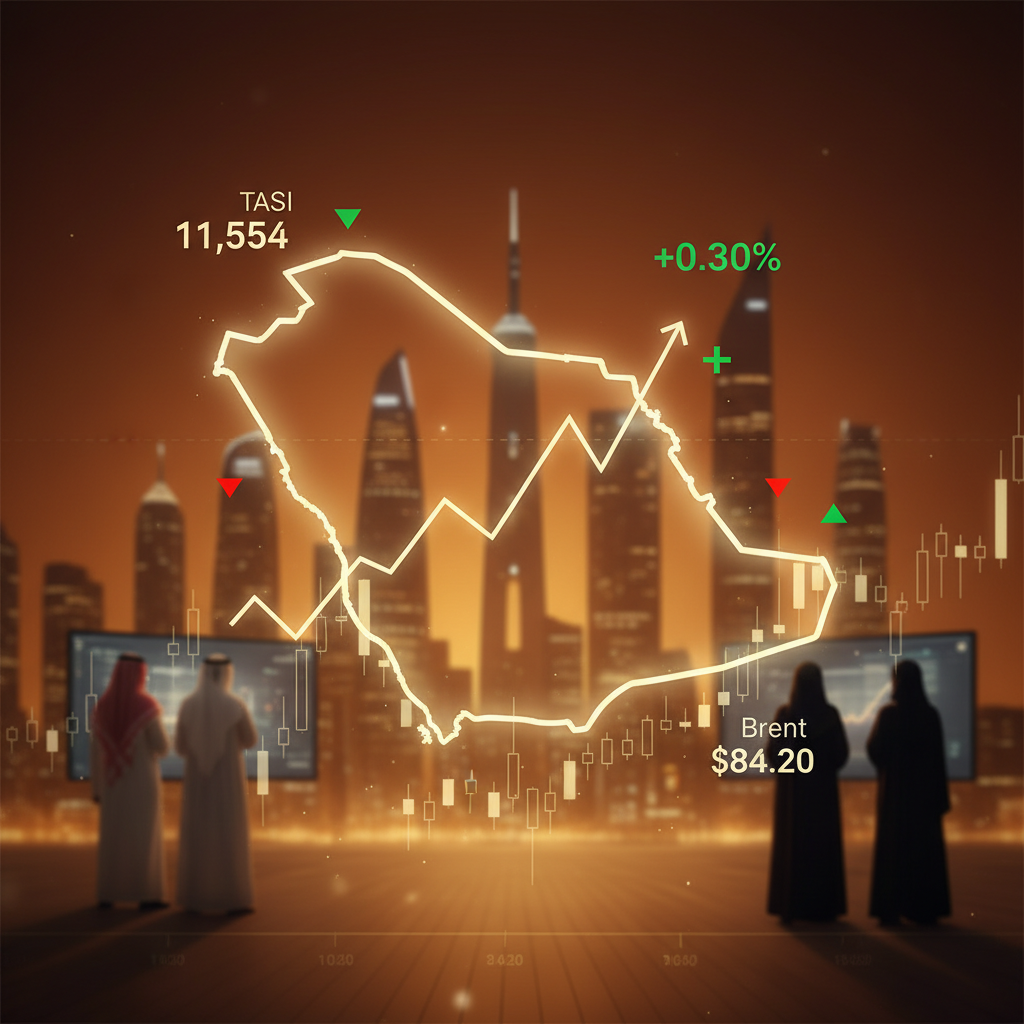
PIF Board approves 2026-2030 strategy; TASI ends week at 11,554
PIF sets three-portfolio structure targeting six domestic ecosystems; TASI ends the week at 11,554.16 after touching a five-month high on April 15.
Frequently asked questions
What are the main steps in a Saudi IPO?
In broad terms: appoint a financial advisor and legal advisor, prepare the company and its financials, file the registration and offering application with the CMA, obtain prospectus approval, run the institutional book-building to set the price, open the retail subscription, allocate shares, and list on the Saudi Exchange. The book-building period cannot exceed 14 calendar days, and the CMA does not set the price — it is determined by demand from participating institutions.
Should we list on the Main Market or Nomu?
It depends on size, track record, and investor strategy. The Main Market opens the full institutional and retail base but carries heavier listing thresholds and quarterly reporting. Nomu is built for growth companies, is restricted to qualified investors, and has lighter obligations — half-yearly reporting and lower entry thresholds. Many companies use Nomu as a first step and migrate to the Main Market after meeting its requirements.
How long does IPO preparation take?
Readiness work typically runs well ahead of the formal filing. Financial-history requirements, governance changes, and the build-out of an investor-relations function are best addressed months before a company approaches the CMA. The formal regulatory process is shorter; the preparation that determines a clean outcome is longer.